A public sauna designed for high visitor volumes needs a fundamentally different approach than a home sauna. The key is matching every design decision, from heater capacity to ventilation flow to surface materials, to the demands of continuous, all-day use by rotating groups of people. Whether you are planning a hotel spa, a community bathhouse, or a wellness facility, the decisions you make at the design stage directly determine how well the sauna performs and how long it lasts. Below, we cover the most important questions to get right before you build.
What makes a public sauna different from a private one?
A public sauna is designed for continuous, multi-user operation rather than occasional personal use. Where a home sauna might run two or three times a week for a single household, a commercial sauna often operates for eight or more hours daily, cycling through dozens or hundreds of bathers. This changes almost every design requirement, from heater power output to drainage capacity to regulatory compliance.
In a private sauna, you control the experience entirely. You choose the temperature, the steam, and the timing. In a public setting, the sauna must perform consistently for people with different expectations, different tolerances for heat, and different bathing habits. The equipment must recover quickly between sessions, the surfaces must withstand constant moisture and cleaning, and the safety systems must meet commercial standards.
Finnish sauna tradition draws a clear line between the cozy home sauna and the public bathhouse, and that distinction matters in practice. A community sauna is a social space, which means bench layout, entry and exit flow, and the placement of the heater all affect how comfortably people share the space. Designing for that social dynamic is just as important as getting the technical specifications right.
How many visitors per hour can a public sauna handle?
A standard rule of thumb in commercial sauna planning is to allow roughly 1.5 to 2 square meters of bench space per person. A sauna room of 20 square meters can comfortably seat around 10 to 12 people at a time. If each group stays for 15 to 20 minutes before rotating, a single sauna room can realistically serve 30 to 50 visitors per hour under well-managed conditions.
That number depends heavily on how the facility is operated. Open-access public saunas with no time limits will see slower turnover and more crowding. Facilities that use timed sessions or entry limits can push throughput higher while maintaining comfort and safety. The heater’s recovery time between heavy steam rounds also limits how quickly the space can be used at full intensity.
Sauna capacity planning should also account for peak periods. A hotel spa may see most of its sauna traffic in a two-hour window in the evening. Designing only for average daily use rather than peak load leads to overcrowding and a poor experience during the busiest times. Build for your peak, not your average.
What type of sauna heater is best for high-traffic use?
For high-traffic public saunas, a commercial-grade electric sauna heater with a large stone capacity is the most practical choice. These heaters, sometimes called laitoskiukaat in Finnish, are built for long operating hours, fast heat recovery, and consistent performance across many users. They typically come without a built-in controller, allowing facilities to integrate them into building management systems or use dedicated commercial control units.
Electric heaters are preferred in most commercial settings because they are easier to regulate, require no chimney, and can be switched on and off remotely. A wood-burning stove creates a more traditional atmosphere and exceptional steam quality, but managing fire, ash, and smoke in a high-volume facility adds operational complexity that most commercial operators want to avoid.
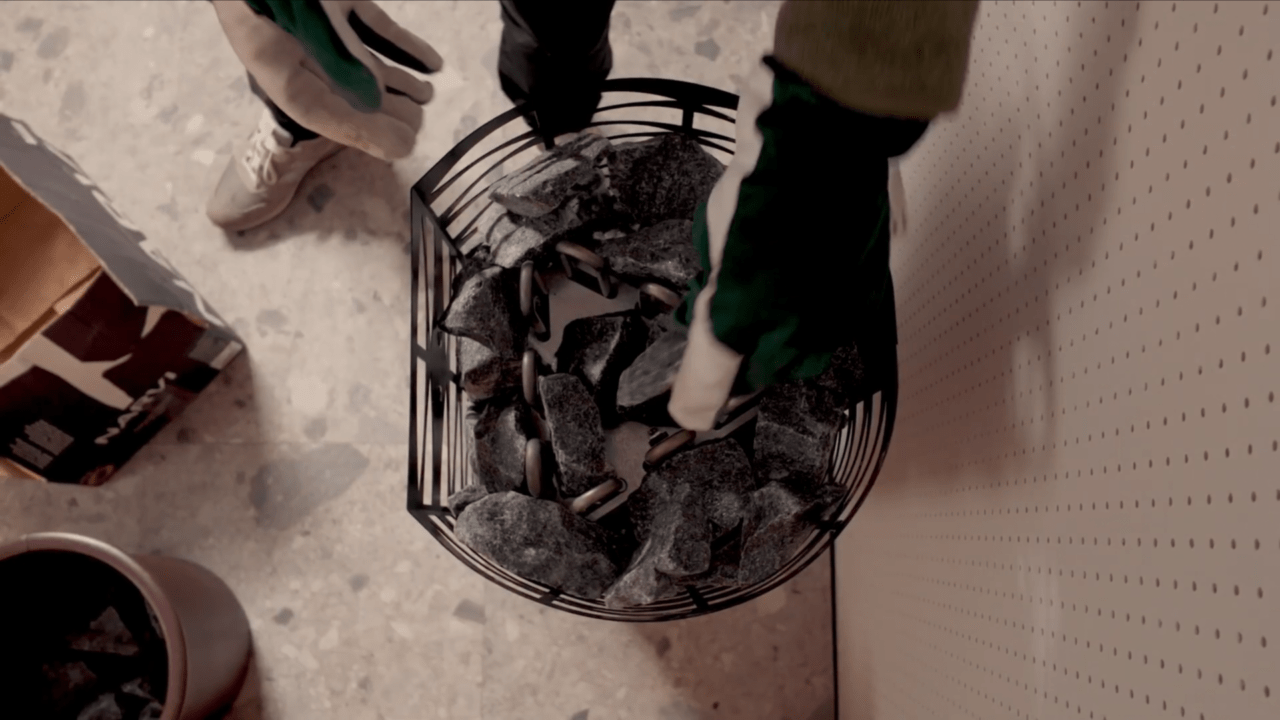
Stone mass matters significantly in a high-traffic sauna. A heater with a large volume of stones stores more thermal energy, which means it can handle repeated water pours without dropping temperature sharply. When dozens of bathers pour water over the course of a busy evening, a heater with limited stone capacity will struggle to maintain consistent steam. For large public saunas, look for heaters with substantial stone loads and power ratings designed for the room volume.
For large commercial sauna spaces, the Narvi Velvet 35 is a wood-burning option worth considering. It is handcrafted in Finland, built for demanding use, and designed to deliver generous, soft steam even for bigger groups. Its replaceable firebox extends the stove’s service life, which matters in a professional context where downtime is costly.
Browse our full range of sauna heaters for professional use
How should ventilation be designed in a high-volume public sauna?
Ventilation in a high-volume public sauna must be designed to handle the moisture, heat, and carbon dioxide produced by many bathers simultaneously. The general principle is a continuous supply of fresh air at a low level and exhaust at a high level, creating a steady flow that refreshes the air without creating cold drafts across the benches. In a commercial sauna, this airflow needs to be significantly more active than in a home sauna.
Poor ventilation is one of the most common reasons a public sauna feels uncomfortable even when the temperature is correct. Stale air, excessive humidity that does not convert to pleasant steam, and a feeling of suffocation are all signs of inadequate airflow. Good public sauna ventilation keeps the air feeling fresh and the löyly light and enjoyable rather than heavy and oppressive.
Key ventilation principles for high-traffic saunas include:
- Supply air inlet positioned low, near the heater, so incoming air warms before reaching bathers
- Exhaust outlet placed near the floor on the opposite wall to draw air across the room evenly
- Ventilation rates calculated for the number of occupants, not just the room volume
- Mechanical ventilation systems in larger facilities to ensure consistent airflow regardless of outdoor conditions
- A separate drying cycle after each session to prevent moisture buildup in the structure
In Finland, commercial sauna ventilation is typically designed by a building services engineer as part of the construction plan. If you are retrofitting an existing space, getting a ventilation assessment before installing the heater is strongly recommended.
What materials and surfaces hold up best under constant use?
In a high-traffic public sauna, surfaces must withstand constant heat, moisture, steam, and the mechanical wear of many people sitting, leaning, and moving through the space every day. The right material choices significantly reduce maintenance costs and extend the life of the sauna room.
Benches and wood surfaces
Thermally treated wood, such as thermowood or heat-treated aspen, is widely used in commercial saunas because it resists moisture absorption, does not splinter easily, and remains stable through repeated heating and cooling cycles. Untreated softwoods can warp, crack, and develop rough surfaces quickly under heavy use. Avoid wood species that contain resins, as these can cause burns when the surface gets hot.
Walls, floors, and drainage
Walls in a commercial sauna are typically lined with heat-treated wood paneling on the interior, backed by proper insulation and a vapor barrier. Floors should be non-slip tile or treated concrete with effective floor drains, as water management in a busy public sauna is a constant challenge. Grout lines and drainage channels need to be sized for the volume of water used during peak hours. All materials in contact with moisture must be resistant to mold and easy to clean with commercial cleaning agents.
What safety and compliance requirements apply to public saunas?
Public saunas are subject to building regulations, electrical standards, and health and safety requirements that go well beyond what applies to a home installation. The specific rules vary by country, but the core requirements cover electrical installation, heater certification, ventilation, emergency access, and hygiene standards.
On the electrical side, commercial sauna heaters must be installed by a certified electrician. According to standard IEC 60364-7-703, sauna heaters must not be connected via a residual current device (RCD), which is a requirement that surprises many facility managers used to standard electrical installations. All wiring, control systems, and safety sensors must comply with the applicable national standard for sauna electrical installations.
Heaters used in commercial settings should carry CE certification, confirming they have been tested to European safety standards. This is not just a regulatory checkbox. It tells you the heater has been independently verified to perform safely under the conditions it is rated for. We test all our heaters to CE standards before they leave our facility in Rauma.
Additional compliance areas to address in a public sauna design include:
- Maximum occupancy limits posted visibly in the sauna room
- Emergency exit or communication system accessible from inside the sauna
- Temperature limiting devices to prevent the room from exceeding safe maximums
- Thermostat placement in the hottest part of the room, typically 10 cm below the ceiling above the heater
- Regular inspection and maintenance records for all heating equipment
- Hygiene protocols for benches, floors, and shared accessories
If you are designing a public sauna for the first time, working with a local building authority early in the process will save significant time and cost compared to making corrections after construction.
Designing a public sauna for high visitor volumes is a technical challenge, but it is also an opportunity to create a genuinely excellent bathing experience that keeps people coming back. Getting the heater capacity, ventilation, materials, and compliance right from the start is what separates a sauna that works on opening day from one that continues to perform well years later. We have been building Finnish sauna heaters since 1937, and our professional-grade range covers everything from compact electric heaters to large-capacity wood-burning stoves for demanding commercial use. Find your nearest dealer and get advice from a local sauna professional or contact us directly if you have questions about choosing the right heater for your project.